
Yoga Breaks for the Boardroom: Wellness Routines for Professionals
Combating Corporate Stress: The Need for Accessible Wellness
Modern professionals are consistently navigating a demanding landscape of deadlines, meetings, and strategic decisions. The chronic stress associated with this environment can manifest in numerous ways, impacting physical and mental well-being, and ultimately, productivity. Burnout, anxiety, and physical ailments like back pain and headaches are rampant. Recognizing the need for effective and accessible wellness strategies, many organizations are exploring yoga breaks as a viable solution. These brief, targeted routines offer a practical way to mitigate stress, improve focus, and enhance overall performance, all within the constraints of a busy workday.
Understanding the Benefits: More Than Just Stretching
Yoga, beyond its physical aspects, is a holistic practice that integrates mind, body, and breath. Introducing it into the workplace provides a multitude of benefits:
- Stress Reduction: Specific yoga postures and breathing techniques, like diaphragmatic breathing and child’s pose, directly target the nervous system, promoting relaxation and reducing cortisol levels, the hormone associated with stress.
- Improved Focus and Concentration: Yoga emphasizes mindfulness and present moment awareness. Techniques like mindful breathing and focused gazing (drishti) train the mind to concentrate, sharpening focus and improving decision-making abilities.
- Enhanced Physical Health: Desk jobs often lead to sedentary lifestyles, contributing to musculoskeletal issues. Yoga postures improve flexibility, strengthen core muscles, alleviate back pain, and enhance posture, counteracting the negative effects of prolonged sitting.
- Increased Energy Levels: While seemingly counterintuitive, gentle yoga practices can boost energy levels by improving circulation and oxygen flow to the brain. This combats fatigue and promotes alertness throughout the day.
- Boosted Morale and Team Cohesion: Incorporating group yoga sessions can foster a sense of camaraderie and shared well-being among colleagues, leading to improved team dynamics and a more positive work environment.
- Improved Sleep Quality: Regular yoga practice, even in short bursts, can regulate the nervous system and reduce stress, leading to better sleep patterns and increased daytime alertness.
- Enhanced Creativity: By calming the mind and reducing stress, yoga allows for greater clarity and mental space, which can unlock creativity and innovative thinking.
Designing Effective Yoga Breaks: Key Considerations
To successfully integrate yoga into the professional setting, careful consideration must be given to the design of the routines. The following factors are crucial:
- Duration: Yoga breaks should be brief, typically ranging from 5 to 15 minutes, to accommodate busy schedules and maintain productivity.
- Accessibility: Routines should be accessible to individuals of all fitness levels and physical abilities. Modifications should be offered for those with limitations or injuries.
- Simplicity: Postures should be simple, easy to learn, and require minimal equipment or space. Focus on foundational poses that provide maximum benefit with minimal complexity.
- Adaptability: Routines should be adaptable to various settings, including offices, conference rooms, and even individual workstations.
- Variety: Incorporating a variety of postures and techniques prevents boredom and addresses different physical and mental needs.
- Guidance: Providing clear and concise instructions, either through guided audio, video, or in-person instruction, ensures proper form and maximizes the benefits of the practice.
- Integration: Encourage integration by reminding employees to use techniques learned during yoga breaks throughout their day, like mindful breathing during stressful situations.
Sample Yoga Routines for the Workplace: Practical Examples
These routines can be adapted and modified to suit individual needs and preferences. Always consult with a healthcare professional before starting any new exercise program.
Routine 1: The Desk Detox (5 minutes)
- Seated Spinal Twist: Sit tall in your chair, feet flat on the floor. Gently twist your torso to the right, placing your right hand on the back of the chair and your left hand on your right thigh. Hold for 3-5 breaths, then repeat on the left side. (Benefits: Improves spinal mobility, releases tension in the back and shoulders.)
- Neck Rolls: Gently drop your chin to your chest, then slowly roll your right ear towards your right shoulder. Hold for a breath, then roll your chin back to your chest and repeat on the left side. Complete 3-5 repetitions on each side. (Benefits: Relieves neck tension, improves range of motion.)
- Wrist Stretches: Extend your arms in front of you, palms facing down. Gently bend your wrists down, feeling a stretch in the tops of your forearms. Hold for a few breaths, then repeat with palms facing up, bending your wrists up. (Benefits: Alleviates wrist pain associated with typing.)
- Seated Cat-Cow: Sit tall in your chair. On an inhale, arch your back, draw your shoulders back, and lift your chest (Cow Pose). On an exhale, round your spine, tuck your chin to your chest, and draw your navel in (Cat Pose). Repeat 5-8 times. (Benefits: Improves spinal flexibility, stimulates digestion.)
- Deep Breathing: Close your eyes and focus on your breath. Inhale deeply through your nose, filling your lungs completely. Exhale slowly through your nose, releasing all the air. Repeat 5-8 times. (Benefits: Calms the nervous system, reduces stress.)
Routine 2: The Energy Booster (10 minutes)
- Standing Mountain Pose (Tadasana): Stand tall with your feet hip-width apart, arms at your sides. Engage your core, lengthen your spine, and imagine a string pulling you up from the crown of your head. Hold for 5-8 breaths. (Benefits: Improves posture, grounds and centers the body.)
- Standing Side Stretch (Trikonasana Variation): From Mountain Pose, reach your right arm overhead and gently lean to the left, feeling a stretch in your right side body. Hold for 3-5 breaths, then repeat on the other side. (Benefits: Stretches the side body, improves flexibility.)
- Gentle Backbend (Cobra Pose Variation): Stand with your feet hip-width apart. Place your hands on your lower back, fingers pointing down. Gently press your hips forward and lean back slightly, feeling a stretch in your chest and upper back. Hold for 3-5 breaths. (Benefits: Opens the chest, improves posture.)
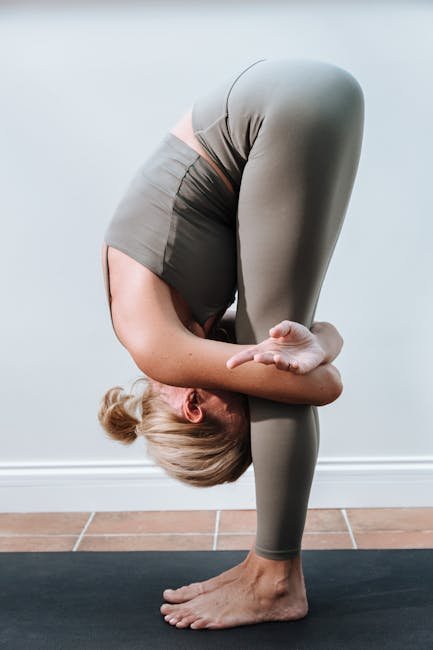
- Standing Forward Fold (Uttanasana Variation): From Mountain Pose, bend your knees slightly and fold forward from your hips, allowing your head and arms to hang heavy. Hold for 5-8 breaths. (Benefits: Stretches the hamstrings and back, calms the nervous system.)
- Warrior II (Virabhadrasana II Variation): Step your feet wide apart. Turn your right foot out 90 degrees and your left foot in slightly. Bend your right knee over your right ankle. Extend your arms out to the sides, parallel to the floor. Gaze over your right hand. Hold for 3-5 breaths, then repeat on the other side. (Benefits: Strengthens legs and core, improves balance.)
- Deep Breathing: Close your eyes and focus on your breath. Inhale deeply through your nose, filling your lungs completely. Exhale slowly through your nose, releasing all the air. Repeat 5-8 times. (Benefits: Calms the nervous system, reduces stress.)
Routine 3: The Mindful Moment (15 minutes)
- Seated Meditation: Find a comfortable seated position in your chair, with your feet flat on the floor and your spine straight. Close your eyes and focus on your breath. Observe the sensations of your breath entering and leaving your body, without judgment. If your mind wanders, gently redirect your attention back to your breath. Continue for 5 minutes. (Benefits: Calms the mind, reduces stress, improves focus.)
- Body Scan Meditation: While seated with your eyes closed, bring your awareness to different parts of your body, starting with your toes and working your way up to the top of your head. Notice any sensations, such as tingling, warmth, or tension. Acknowledge the sensations without judgment, and then move on to the next part of your body. Continue for 5 minutes. (Benefits: Increases body awareness, reduces stress, promotes relaxation.)
- Gratitude Journaling: Take out a pen and paper and write down three things that you are grateful for in your life. Reflect on these things and allow yourself to feel the emotions associated with gratitude. (Benefits: Boosts mood, increases happiness, promotes positive thinking.)
- Mindful Walking: If possible, take a short walk outside or around the office. Pay attention to the sensations of your feet touching the ground, the feeling of the air on your skin, and the sights and sounds around you. Walk slowly and deliberately, focusing on the present moment. (Benefits: Improves focus, reduces stress, connects you with nature.)
Tools and Resources for Implementation:
- Yoga Mats (optional): Provide yoga mats for employees who prefer to practice on the floor.
- Guided Audio/Video: Utilize readily available online resources or create custom recordings for guided yoga sessions.
- Designated Space: If possible, designate a quiet space for yoga breaks.
- Internal Champions: Identify employees who are passionate about yoga and can help promote the practice within the organization.
- Educational Workshops: Offer workshops on the benefits of yoga and proper form.
Overcoming Challenges: Addressing Potential Concerns
- Lack of Time: Emphasize the brevity of the routines and the benefits of even short bursts of yoga.
- Lack of Space: Adapt routines to be performed in individual workstations or conference rooms.
- Concerns about Flexibility: Assure employees that no prior experience or flexibility is required and that modifications are available.
- Perception of Unprofessionalism: Communicate the benefits of yoga to management and emphasize its positive impact on productivity and well-being.
By addressing these potential concerns and implementing well-designed yoga break programs, organizations can create a healthier, more productive, and more engaged workforce.